
McIntosh Scheduled and Actual Release
A scheduled date is an estimate or date calculated before release. The actual date records when the person leaves a specific facility. Those dates may differ because a court order, hold, transfer, discipline decision, sentence correction, or parole action intervenes. A pretrial detainee has no sentence-end date. Release depends on bond, dismissal, a court order, or another legal event.
Leaving McIntosh County Jail can also mean transfer rather than freedom. A transfer to GDC ends the county-jail stay, but state custody continues. The jail release record should identify the destination or release type. The GDC record then becomes the main source for the state term.
| Date type | Meaning | Source |
|---|---|---|
| County release date | Exit from McIntosh County Jail | Jail record and court order |
| GDC release date | State-prison custody date | GDC offender record |
| TPM | Tentative month for final parole review | Parole Board lookup |
| Actual release | Completed custody exit | Releasing agency record |
Find McIntosh Projected Release Dates
Begin with custody type, not a date calculator. A sentence length alone cannot account for jail credit, legal exclusions, holds, or Board action. Use a full name plus a GDC number, case number, birth date, or age when the source permits it.
- Call McIntosh County Jail for a person still held on a county booking and ask what order controls release.
- Check the sentencing court for bond, jail credit, sentence terms, and later orders.
- For a state transfer, use the GDC Find an Offender tool.
- Match the record by GDC ID, case number, age, and other identifiers.
- Review facility, status, sentence data, and release-date information.
- Check the Board's TPM tool only when parole timing is relevant.
- Confirm a pending release directly before arranging pickup or travel.
The general McIntosh County release record path can establish whether a county exit was release to the community or a transfer.
The manifest screenshot comes from the official TPM explanation.
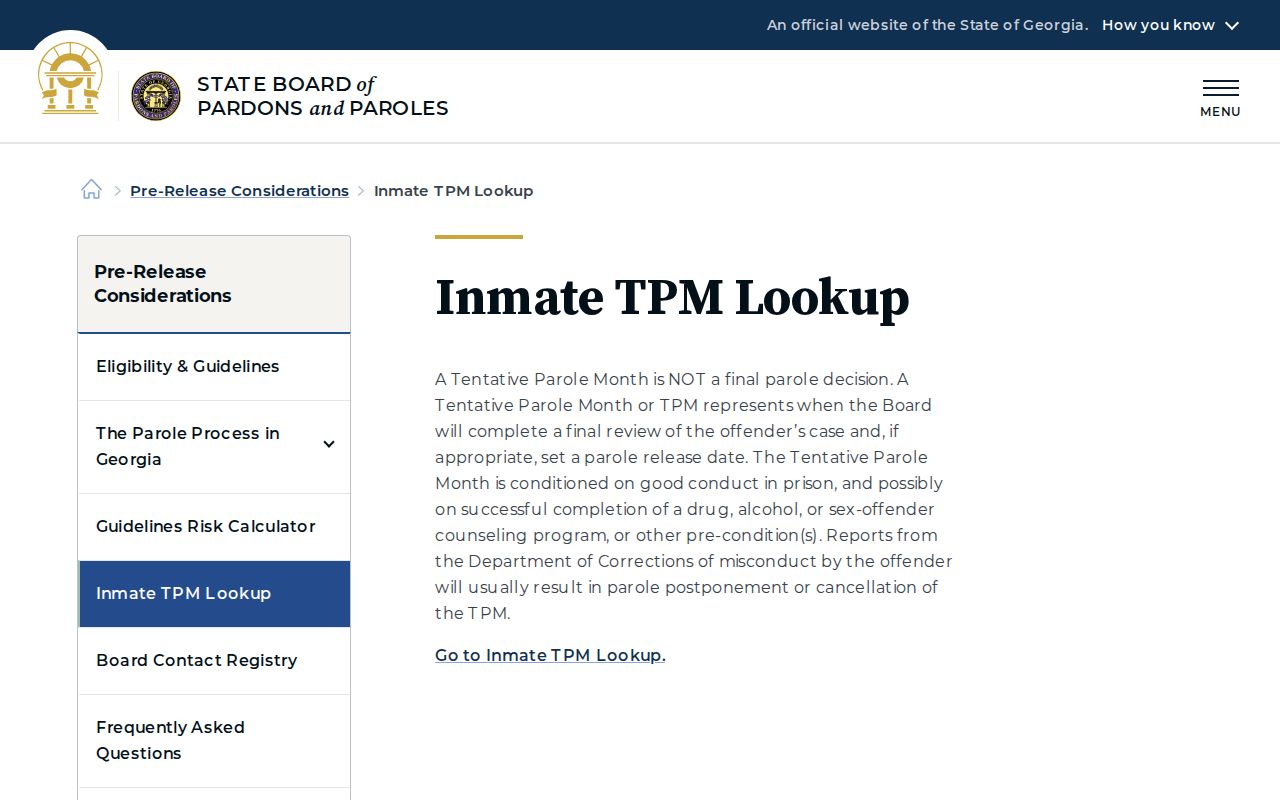
It reinforces that a tentative parole month is not the same as a completed release.
McIntosh Release Search Fields
GDC covers state custody, not each short county-jail stay. Georgia's search accepts name, GDC ID or case number, age, and other identifying information. A person who bonded out of McIntosh County Jail without entering GDC may have no GDC record for that event.
| Field | Use | Caution |
|---|---|---|
| GDC ID | Strong state-record match | Applies to GDC subjects |
| Name | Broad first search | Confirm common names |
| Case number | Connects state and court data | Formats can differ |
| Age and description | Narrows possible matches | Do not rely on one field |
| Release information | Shows state-custody timing | Verify if still projected |
GDC warns that public information may be incomplete or inaccurate. Compare it with the sentencing order. If the state search shows no match, return to the jail and McIntosh County court instead of assuming release.
McIntosh Work Incentive Credits
Georgia does not support a blanket claim that every inmate serves 85 percent or receives automatic good time. O.C.G.A. § 42-5-101 authorizes work incentive credits for institutional achievement, satisfactory work, and compliance with conduct standards. It permits up to one day of credit for each qualifying day. Eligibility and application still depend on the sentence and legal rules.
Serious offenses may carry mandatory-service or parole-exclusion rules. The Board's eligibility guidance applies its process only to people who are statutorily eligible. The precise conviction statute and sentencing order matter. No McIntosh County jail good-time formula was verified, so ask the jail for its commitment and release calculation.
The official statute captured in the manifest explains the state credit authority.
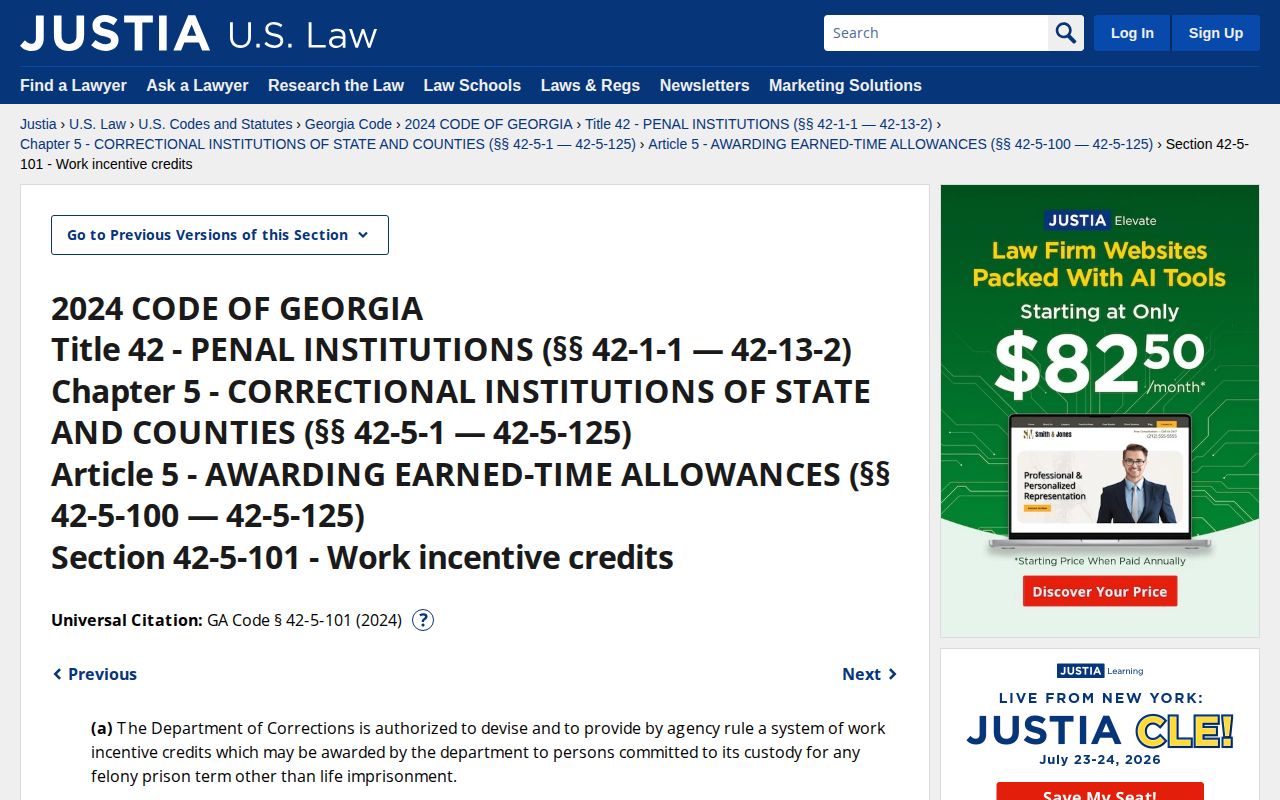
It supports a fact-specific calculation, not a universal percentage shortcut.
Changes to McIntosh Release Dates
A future date can move forward or back. Some events change the legal end date. Others stop physical release even when one sentence has reached its end.
| Factor | Possible effect | Where to confirm |
|---|---|---|
| Jail or sentence credit | Changes time remaining | Court and holding agency |
| Work incentive credit | May reduce qualifying time | GDC |
| Discipline | May affect credits or parole review | GDC or Board |
| Detainer or warrant | May cause transfer or continued custody | Jail and receiving agency |
| Court correction | Changes sentence calculation | Sentencing court |
| Parole decision | Sets, delays, or denies conditional release | Parole Board |
A detainer is a request by another authority to hold or transfer a person. Thus, the person may be released from one facility but remain confined elsewhere. Ask where the person goes next.
McIntosh TPM Is Tentative
Georgia's Tentative Parole Month is distinctive and often misunderstood. The Board says a TPM marks the month for final review and possible setting of a parole release date. It is not a final parole decision. Good conduct, counseling, programs, or other preconditions may still matter.
The Board may reconsider and change a prior decision up to the release date. A TPM therefore should not be merged with the GDC release date, the county court sentence, or the McIntosh jail exit date. Each comes from a different authority and answers a different question.
The Georgia parole process page shown below explains that Board decisions can change before release.
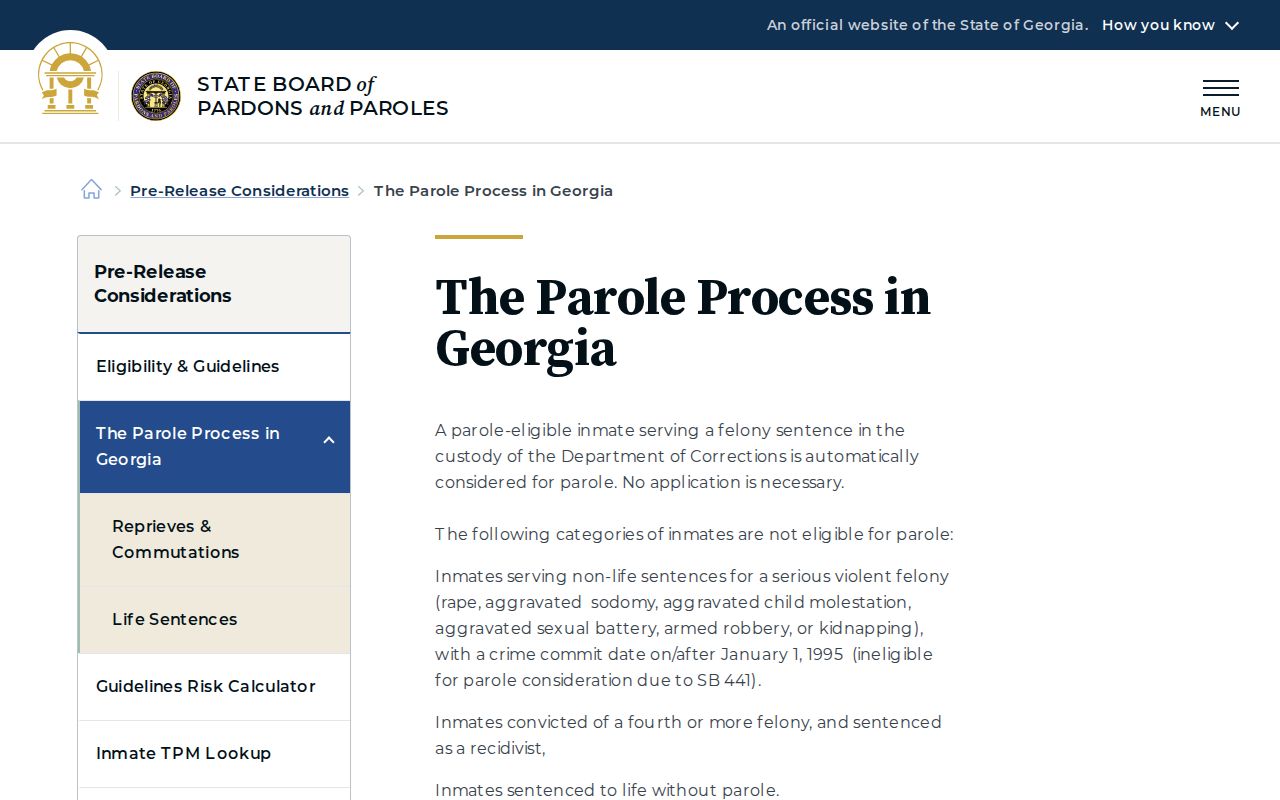
Travel and pickup plans should rely on final confirmation from the holding institution.
Confirm McIntosh Actual Release
For a county sentence, ask McIntosh County Jail for the commitment calculation and check the court's jail-credit notation. No official local rule was found that automatically moves a release near a weekend or holiday. Confirm directly.
For state custody, compare GDC status with parole information. A VINELink release alert can flag a custody change while the record is active, but it does not explain the sentence or release reason. The final agency record remains the best proof.
Georgia release logistics can include a GDC release card for account funds. State rules also address clothing, a limited allowance, and common-carrier travel for qualifying felony releases. These are not guarantees about McIntosh County Jail's local lobby process. Ask the releasing institution what will occur.
McIntosh County Sentence Records
The filed sentencing order is the base document for a sentenced person's release calculation. It can state the total term, credit for time already served, whether confinement is followed by probation, and whether separate counts run together or one after another. A later amended order may correct or change those terms. The McIntosh County court docket is therefore essential when a public locator and an expected date do not match.
Superior Court handles felony sentences, while State Court handles many misdemeanor matters. Juvenile records are restricted and do not follow the ordinary public route. Ask the clerk for the sentencing order and any later modification, correction, or revocation order that affects confinement. Jail staff apply the orders received by the facility, but the sentencing court controls the judgment itself.
- Time served
- Credit for confinement already completed.
- Split sentence
- A term divided between confinement and probation.
- Concurrent terms
- Terms that run at the same time.
- Consecutive terms
- Terms that run one after another.
- Detainer
- A request from another authority to hold or receive the person.
These terms can move an estimate far more than a simple credit formula. Read the whole order and identify the authority that currently holds the person before calculating anything.
McIntosh Jail Date Calculation
No published McIntosh County Jail good-time formula was verified. For a short county sentence, ask the jail for the commitment and release calculation and compare it with the court's jail-credit notation. If bond is posted, processing still depends on receipt of the bond, clearance of holds, and the jail's completion of the release process. A judge's oral statement is not a substitute for an entered order received by the jail.
A county release near a weekend or holiday also needs direct confirmation. Research did not find a McIntosh rule that always advances or delays such releases. Ask whether the stated date is the sentence-end date, the expected processing date, or merely an estimate. Also ask whether another county, GDC, federal authority, or immigration authority has lodged a hold.
If the person is transferred, record the receiving agency. The McIntosh jail exit date then closes only the local custody event. A new projected date must be obtained from the receiving system.
Resolve McIntosh Release Date Conflicts
Conflicting dates usually mean that two systems are describing different events. A jail record may show transfer to GDC. GDC may show a later state-prison release date. The Board may show a TPM for final parole review. VINELink may report a custody change without stating the sentence basis. None of these fields should be relabeled as another.
- Record the exact field name and the agency displaying it.
- Note the date and time the record was checked.
- Confirm the person's current facility or custody authority.
- Compare the sentencing order and any amended order.
- Ask the current holder which event the projected date represents.
- Recheck after any Board action, court order, discipline decision, or detainer change.
If GDC holds the person, McIntosh County Jail cannot confirm the final state release. If the county jail still holds the person, the parole lookup cannot set the local bond-processing time. Responsibility follows current custody.
Keep confirmation practical. Ask for the current status, the event expected on the stated date, and the agency that will act next. A date can mean release to the community, transfer, final parole review, sentence expiration, or eligibility for another decision. Those outcomes are not interchangeable.
McIntosh Parole Eligibility Limits
Parole eligibility is controlled by the conviction and sentence, not by McIntosh County residence. Georgia's Board uses decision guidelines for eligible offenders serving less than life, but the guidelines do not create a right to release. The Board reviews crime severity, risk, sentence information, institutional conduct, and other case material. It may establish a future TPM or deny parole at consideration.
Life sentences, recidivist sentences, life without parole, death sentences, and serious mandatory-service offenses can follow different rules or be excluded. That is why no broad percentage should be applied to every state sentence. Read the conviction statute and sentencing order, then check the Board's current eligibility guidance.
A person can also reach the end of a state sentence without parole. In that case, the parolee search may not show active parole even though GDC shows a completed release. Conversely, a TPM may appear while the person remains in prison. The custody status and the Board status must be read together.