
McIntosh Parole and Probation
Parole and probation can both place a person under rules while living in the community, but they begin through different legal acts. The State Board of Pardons and Paroles makes Georgia parole decisions. The Georgia Department of Community Supervision, or DCS, supervises adult felony parolees and probationers. A McIntosh County court, not the parole board, imposes probation.
A person may leave McIntosh County Jail on probation after sentencing. Another person may serve a state prison term and later leave on parole. A split sentence can include prison followed by probation. Someone who serves a full prison term may be discharged without parole. For that reason, one blank parole result does not prove the person is still confined or has no obligations.
| Record type | How it starts | Best verification |
|---|---|---|
| Parole | Board-approved release before a prison sentence ends | Parolee Search, GDC, and DCS |
| Felony probation | Superior Court sentence | Sentencing order and DCS |
| Misdemeanor probation | Trial-court sentence | Sentencing court and named provider |
| Discharge | Custody or supervision term ends | GDC, DCS, Board, or court record |
Verify McIntosh Release Supervision
Start with the custody history. A county-jail release on bond is not parole. A transfer from McIntosh County Jail to GDC is also not a release to the community. The county booking record, original sentencing order, GDC status, and parole record must agree before drawing a conclusion.
- Check the McIntosh County court docket for the sentence, probation term, or transfer order.
- Use the GDC offender search when a state sentence or transfer appears.
- Search the Board's Parolee Search for a person already released on parole.
- Compare parole begin and end dates, office, office number, and primary offense.
- Contact DCS when the public result needs confirmation or felony probation is involved.
- Ask the sentencing court about misdemeanor probation if DCS has no record.
The broader McIntosh County release search helps establish whether the person left jail, transferred, or entered state custody. Supervision verification comes after that custody question is settled.
McIntosh Parole Record Fields
Georgia's parole tools answer two separate questions. The Inmate TPM Lookup concerns a person still in state custody and shows a Tentative Parole Month when one exists. The parolee database concerns someone on parole after release. A TPM is not active parole and is not a firm release date.
- Parole
- Conditional release from state prison before the full sentence expires.
- Probation
- Court-ordered community supervision that may replace or follow confinement.
- TPM
- A tentative month for final parole review, not a promised release.
- Absconder
- A supervised person alleged to have stopped reporting or left supervision without approval.
- Discharge
- The formal end of custody or supervision.
Public parole fields may include the parole begin date, parole end date, parole office, office number, and primary offense. GDC can add the prison facility and release date. The court file supplies the conviction and sentence. Each source describes one part of the same history.
Regional McIntosh Supervision Office
Post-release supervision for McIntosh County is regional. The DCS Claxton Field Office lists McIntosh with Bryan, Evans, Liberty, Long, and Tattnall counties in the Atlantic Circuit. That matters because a person should not assume felony probation and parole are handled at a McIntosh courthouse counter.
105 Daniel Street
Claxton, GA 30417
(912) 739-9612
Monday through Friday, 8:00 a.m. to 5:00 p.m.
Have the full legal name, date of birth, and case or GDC number ready if available. DCS may limit what it can disclose. The office can still identify the proper supervision channel or explain how to reach the assigned office.
The manifest image below comes from the official Claxton office listing.
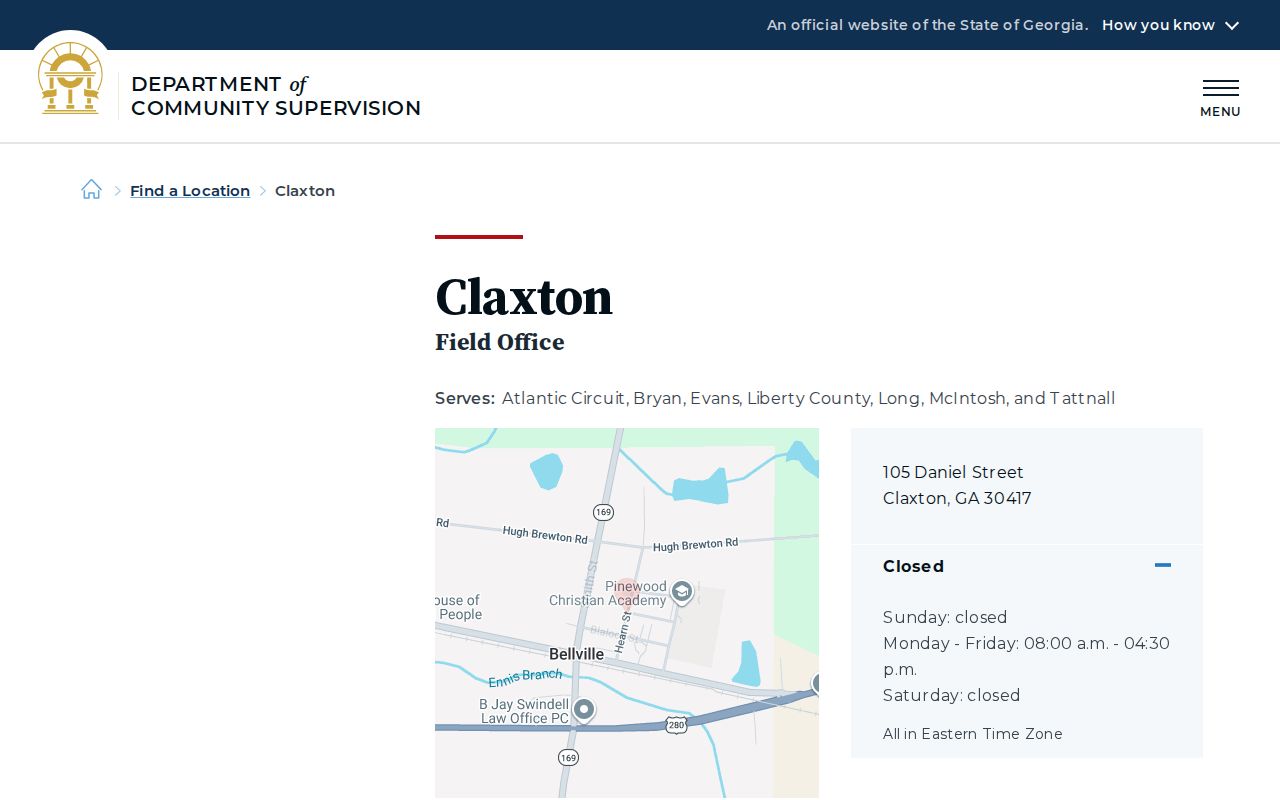
It confirms that McIntosh County supervision routes through the regional DCS structure.
McIntosh Supervision Violations
Conditions vary by order and may require reporting, travel approval, program participation, payment, or compliance with special terms. Only the sentence, parole certificate, and supervising officer define the actual conditions. A general agency description cannot replace those records.
No official McIntosh County absconder list or released-inmate warrant list was verified. If a state system marks a person as absconded or wanted, that is a later supervision event. It does not erase the earlier jail release. A violation may lead to a warrant, arrest, revocation hearing, changed conditions, or return to custody, but the court or parole authority determines the result.
VINELink focuses on custody changes, not compliance with parole or probation. Use it for a new custody event where available, then use DCS, the Board, or the court for the supervision decision.
McIntosh Parole Meeting Limits
Georgia's Board publishes monthly public meeting notices, but those meetings address policy and agency operations. A Board notice expressly states that offender cases are not considered and parole decisions are not made at those meetings. They should not be read like a county court hearing calendar.
The practical public tools are the TPM lookup and parolee search. The Board completes a final review around a TPM and may change an earlier decision up to release. Eligibility also depends on the exact offense and sentence. Serious mandatory-service offenses, life sentences, and other excluded categories do not follow one simple timeline.
The official monthly meeting notice shown in the manifest illustrates the difference between agency meetings and individual decisions.
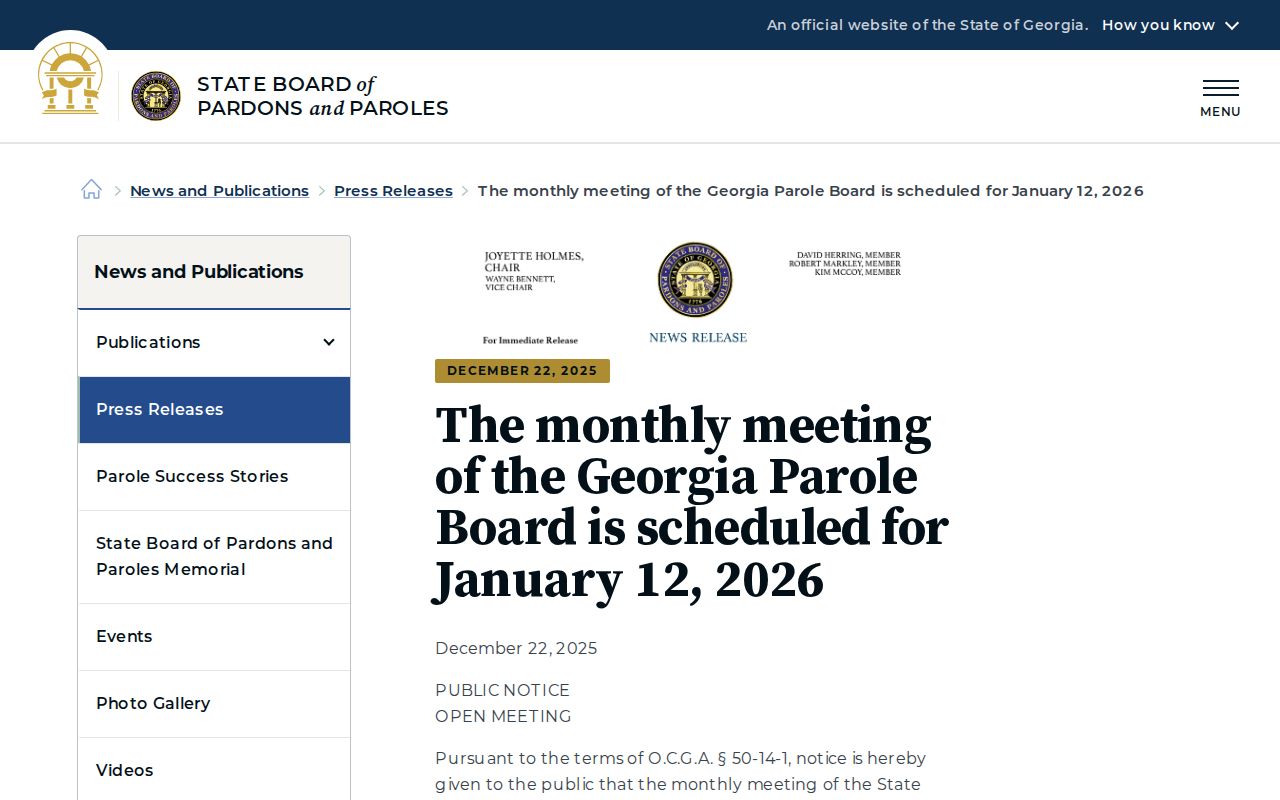
Use it for Board schedule context, not as proof of any person's parole outcome.
McIntosh Release Reentry Path
McIntosh County research did not verify a county-run reentry office. State-prison reentry should therefore be framed through GDC and DCS. The GDC custody and release guidance describes a reentry phase, a release phase, residential planning, release schedules, and benefits assistance. DCS handles the community-supervision side after release.
A residential plan can affect parole timing and the office that receives the case. Family members should distinguish a planned address from confirmed physical release. The parolee record, DCS office, and GDC status supply the clearest confirmation. Local nonprofit or faith support may exist, but no specific McIntosh program should be assumed without a current source.
McIntosh Release Funds and Property
Georgia has specific state-release logistics that should not be mistaken for a McIntosh County Jail lobby policy. GDC says leftover funds on a released person's account are moved to a release card. Georgia Rule 125-2-4 also provides that a felony inmate released from a state or county institution may receive suitable clothing, no more than $25, and a common-carrier ticket home in the United States.
Those provisions help explain what may occur at a qualifying state or county-institution release. They do not prove that every McIntosh County release receives each item. Direct questions about personal property, cash, transport, or pickup should go to the releasing institution before arrival.
Supervision ends only through the controlling authority. Compare the parole end date with Board or DCS confirmation, and compare a probation term with the sentencing court's discharge or termination order. An expired estimate is not enough.
McIntosh Supervision Discharge Records
A release date and a supervision discharge date prove different events. The first marks an exit from a jail or prison. The second marks the formal end of parole or probation. A person can therefore be released from McIntosh County custody yet remain under rules for months or years. The parolee database may display parole begin and end dates, but a displayed end date should be checked against current Board or DCS information when the status matters.
Probation ends under the sentencing court's authority. The original order states the term, while a later order may terminate, modify, extend, or revoke it. For a McIntosh felony case, compare the court docket with DCS confirmation. If the case involved misdemeanor probation outside DCS, ask the sentencing court which office or provider holds the completion record. A blank DCS result does not itself prove discharge.
Keep the discharge or termination record with the earlier jail release confirmation. Together they show the full sequence: confinement ended, community supervision followed, and the legal supervision term later closed. If a public field appears stale, note the date checked and ask the originating office which record controls.
McIntosh Supervision Record Conflicts
Conflicts often arise because each source records a different part of the case. The McIntosh court docket shows the sentence. GDC shows state custody and release information. The Board shows parole timing and parolee fields. DCS manages community supervision. VINELink may show a custody change but does not settle the supervision term.
Write down the exact status, source, and date before calling an office. Ask whether the person is actively supervised, discharged, transferred to another office, or involved in a pending violation. Do not infer a warrant from a missed appointment or an old result. Only the responsible court, Board, DCS office, or issuing agency can confirm that later legal event.
When a parole record and court record use different end dates, first check whether one date belongs to confinement and the other to supervision. Next check for a split sentence, revocation, or amended order. A parole end date does not close a later probation term, and a probation discharge does not rewrite the date of prison release. The Claxton field office can route questions about active felony supervision, while the clerk can identify the filed order that created or changed the term.