
No Published Three-Day Release List
No official McIntosh County 72-hour release feed, roster filter, or archive was found. The sheriff's public website displayed an update notice, and the county department page did not supply an alternate release tool. As a result, there is no verified feed URL, refresh schedule, retention policy, or set of displayed fields. A private page that uses “recent inmates” or “72-hour releases” in its title is not an official substitute.
The wider window still has practical value. Instead of asking whether a person was released “recently,” give the jail a precise start and end time covering the three days in question. This catches overnight events and avoids uncertainty about whether “today” means a calendar date or a rolling 24-hour period.
Check a McIntosh Three-Day Window
Build the inquiry around dates, identity, and destination. A three-day window should produce a chronology, not simply a yes-or-no answer.
- Write down the exact beginning and ending date and time. Include the time zone if the inquiry comes from outside Georgia.
- Recheck the official sheriff website for a new roster or release page. During research it was in update mode, so a public tool could appear later.
- Call McIntosh County Jail at (912) 537-6622 or the Sheriff's Department at (912) 437-6623. Give the person's full name, date of birth if needed, and the defined period.
- Ask for the release timestamp, reason or type, booking number, and destination. Specifically ask whether the person was released to the community, transferred, or held for another authority.
- Match the answer to a McIntosh County court entry when bond, dismissal, sentence completion, or a court order is involved.
- Use GDC search and parole tools for a reported state transfer. Use Georgia VINELink for an active or recent custody record and notification, not as a permanent archive.
- Submit a narrow open-records request if the office cannot provide enough detail by telephone.
If the event likely happened today, the McIntosh County 24-hour release check keeps the inquiry focused on the same-day custody change.
What the 72-Hour Release List Shows
The following fields help reconstruct a three-day period. They are items to ask the custodian for, not fields taken from a public McIntosh feed.
| Requested field | Use within the three-day window |
|---|---|
| Full legal name | Connects the inquiry to the correct person, especially when names are similar. |
| Booking number | Separates one custody episode from earlier or later bookings. |
| Booking date | Provides context for a release that occurred during the requested period. |
| Release date and time | Places the event accurately within the 72-hour range. |
| Release reason or type | Distinguishes bond, court order, time served, dismissal, sentence completion, transfer, or another outcome. |
| Charges and court notation | Points toward the case and judicial entry related to the departure. |
| Transfer or hold details | Shows whether custody continued after the person left McIntosh County Jail. |
| Photo availability | Indicates whether booking material includes a photograph, which is subject to separate Georgia request rules. |
Weekend and Holiday Timing
A 72-hour period is especially useful on Monday because it can span Friday-night, Saturday, and Sunday activity. It does not guarantee that every related record has been indexed by Monday morning. Jail operations continue outside ordinary office hours, while a court clerk's public entry or written-record response may follow a business-day schedule.
No McIntosh County policy was found that automatically changes a release date because it lands near a weekend or holiday. Do not apply a rule from another county. Ask for the actual physical-release timestamp and, if a court order was involved, compare the order date with the jail's processing time.
Georgia's three-business-day open-records response framework also differs from a 72-clock-hour release window. A request delivered Friday may not receive its initial response by Monday merely because three calendar days have elapsed. This distinction matters when a reader is trying to reconstruct the weekend rather than monitor a still-active record.
Requesting an Existing Three-Day Record
The Office of the Sheriff or jail records custodian is the local source. Because no dedicated records portal was verified, call the county's Sheriff's Department listing and ask for the current submission address, email, fax, or in-person channel. Keep proof that the request was delivered.
For a named person, request the booking sheet and release record for the custody episode, including release date and time, reason or type, transfer or hold information, and bond or court-release notation. State the exact 72-hour interval. If asking for every release in that interval, describe the existing list or report sought and ask whether the jail maintains it. Georgia agencies generally need not create a new report that does not already exist.
Keep the scope narrow. The Open Records Act allows applicable copying and search/redaction charges, and the agency must provide notice when estimated costs exceed $25. If a portion is withheld, ask for the specific code section, subsection, and paragraph relied upon and whether the release timestamp or another segregable field can still be provided.
Match Each Outcome to Its Source
A community release from the county jail belongs first in the sheriff's release record. A bond, dismissal, sentence, or court order belongs in the court docket. A transfer to the Georgia prison system belongs in GDC's Find an Offender results and, if parole is involved, in the State Board of Pardons and Paroles tools. VINELink may show or announce a custody change while the participating record is active.
These systems do not all update together, and none should be stretched beyond its role. A current jail roster is about present custody, not a historical release archive. GDC does not establish an ordinary county-jail bond release. VINE does not explain the legal disposition. For a named-person search across all relevant sources, follow the McIntosh County release-record workflow.
If the person cannot be found, check identifiers and custody type before widening the date range. A missing online result may reflect a spelling difference, a transfer intake delay, or the lack of a public historical view. It is not affirmative proof of release. The originating office can distinguish a record-access gap from an actual departure.
McIntosh's Roster Access Gap
The absence of a verified three-day list is a defining local fact. The county Departments page shown below provides the official route to the sheriff but did not itself publish recent releases.
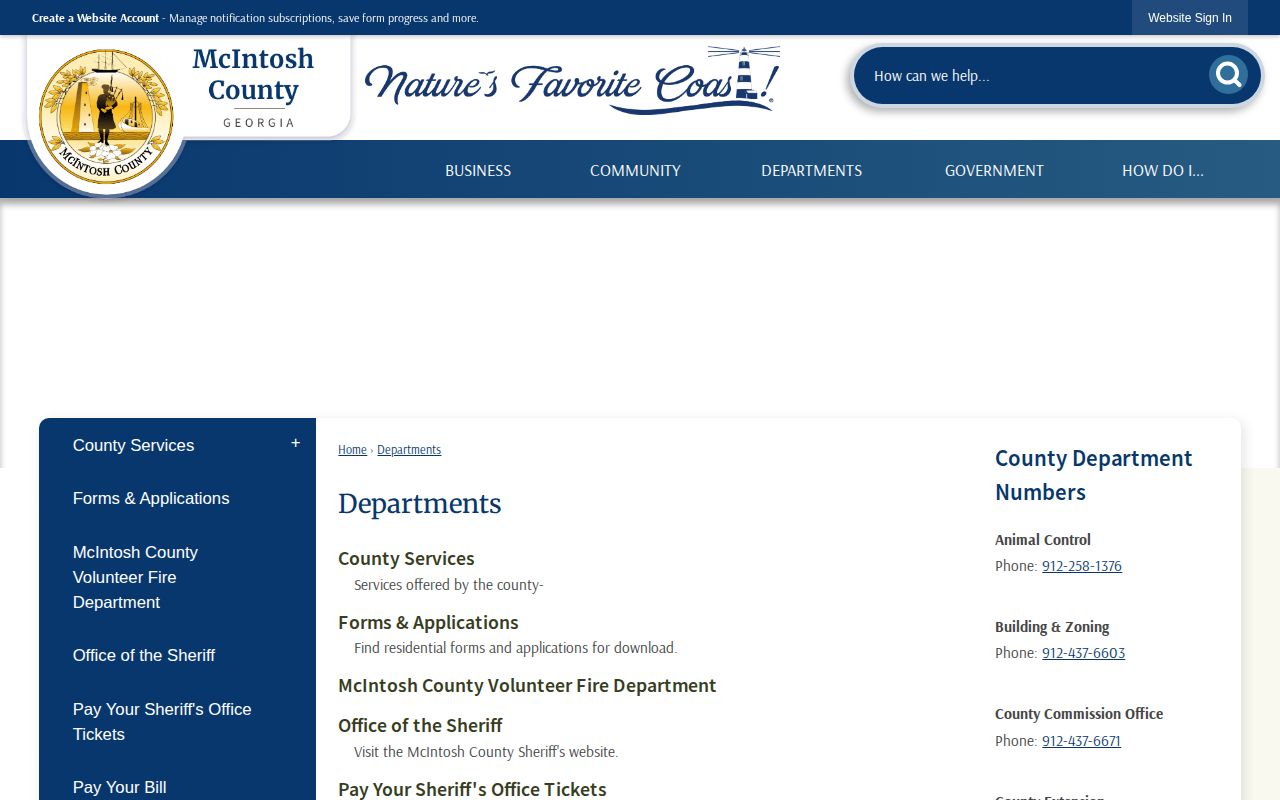
The linked sheriff site was displaying an update notice during research. That explains why phone, written records, court entries, and custody-specific state systems form the local fallback chain.
Release From Jail May Mean Transfer
Over a three-day window, several kinds of departures can appear similar until destination is checked. Someone may leave on bond, after time served, following dismissal, at local sentence completion, or under another court order. Someone else may leave the same building for GDC, another county, federal custody, or an immigration hold.
Ask “where did the person go?” along with “when did the person leave?” A transfer is a release from McIntosh County Jail's custody, but it is not release to the community. The new custodian's locator or records office becomes the next source. If no current record appears immediately, allow for transfer intake and then confirm with both agencies.
Build a short event log when the three-day period includes more than one status. Record the time reported by the jail, the time a court order was entered, the time a VINE alert arrived, and the date a new custodian first displayed the person. These timestamps measure different actions. Keeping them separate prevents a later system update from being mistaken for the physical departure time.
For state custody, search GDC by name, ID, or case number and compare identifying details. A GDC release date concerns the state-custody episode, not necessarily the earlier date the person left the county jail for transfer. For a federal or immigration handoff, switch to the relevant federal locator rather than continuing to search Georgia VINE.
If the three-day range produces no confirmation, ask whether the jail searched by the booking number and whether the requested period includes both endpoints. Then check the court case for an order that was entered but not yet carried out. An order, expected release, and completed physical release are separate events; only the custody source can confirm completion.
Public Record Search
Sponsored Results